

07 Jul Concordia Yawl
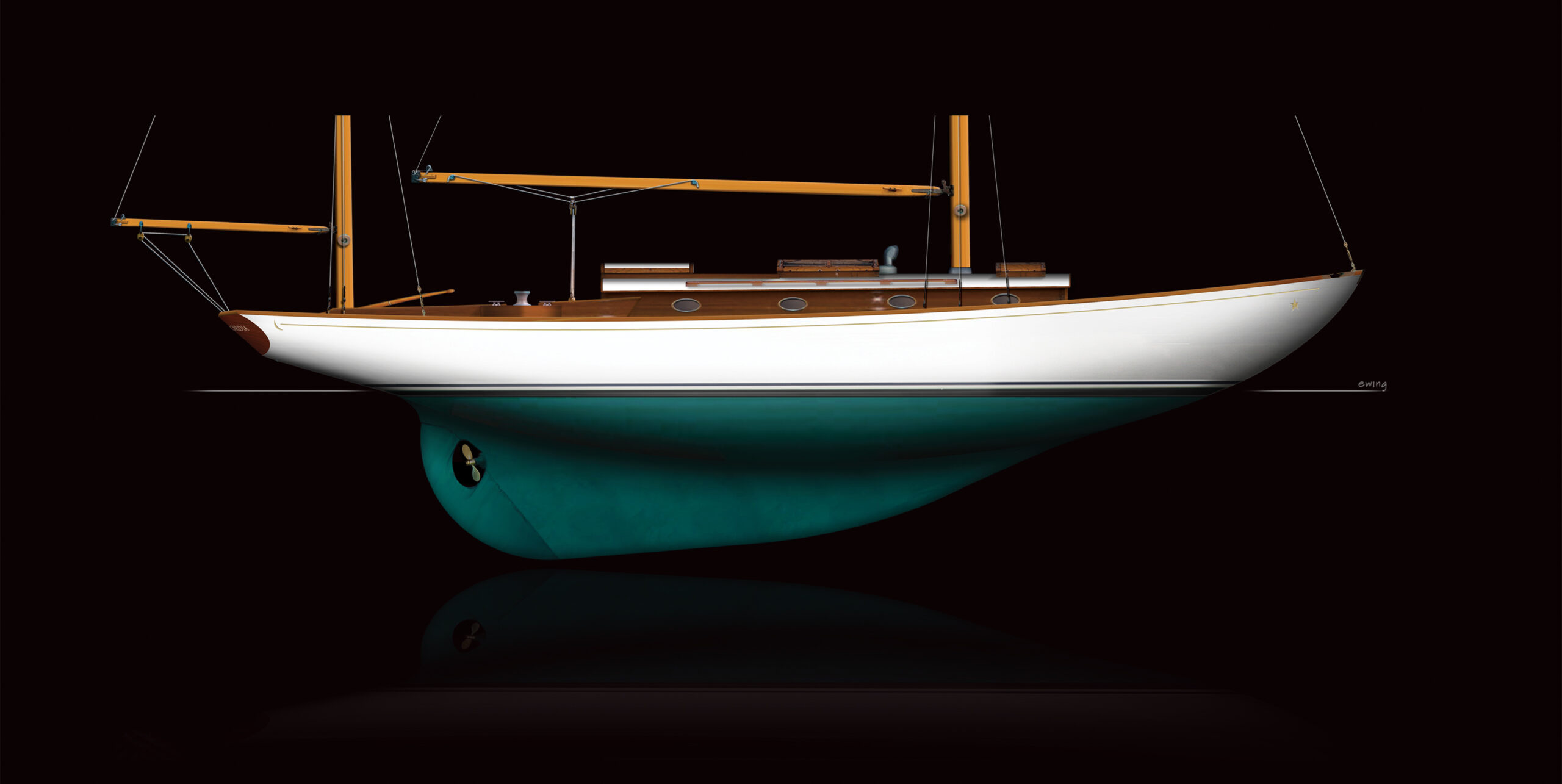
 Few sailing yachts have achieved the legendary status of the Concordia yawl. More than simply a successful design, the Concordia represents an ideal—a rare balance of beauty, performance, craftsmanship, and practicality that has captivated sailors for generations. Elegant enough to command attention in any harbor, yet capable enough to undertake serious offshore passages, the graceful 39-foot yawl embodies the very essence of the classic New England cruising yacht. More than eighty years after her introduction, she continues to inspire admiration from seasoned mariners and newcomers alike, proving that truly exceptional design never goes out of style.
The Concordia story began not with an ambitious production program, but with the aftermath of one of New England’s greatest natural disasters. In September 1938, a powerful hurricane swept across the Northeast, destroying waterfront communities and leaving thousands of boats damaged or sunk. Among the losses was a cherished Colin Archer-style pilot boat owned by the Howland family of Padanaram, Massachusetts. Rather than simply replacing the vessel with another traditional design, Llewellyn Howland and his son Waldo viewed the tragedy as an opportunity to create something better suited to the demanding waters of Buzzards Bay. Working alongside the gifted naval architect C. Raymond Hunt, Waldo developed a yacht that blended the proven virtues of traditional offshore cruisers with the advances of modern yacht design. The result was Java, launched in 1938, the first of what would become one of the most celebrated classes of sailing yachts ever built.
Although Java was conceived as a one-off commission rather than the beginning of a production series, her success was immediate. Fellow sailors admired not only her handsome appearance but also her remarkably balanced sailing qualities. Before long, additional owners requested similar yachts, and what began as a single replacement vessel evolved into an enduring fleet. Built primarily by the renowned Abeking & Rasmussen yard in Germany before the Second World War and later by other skilled builders, each Concordia reflected the same uncompromising standards of construction that would become central to the yacht’s reputation.
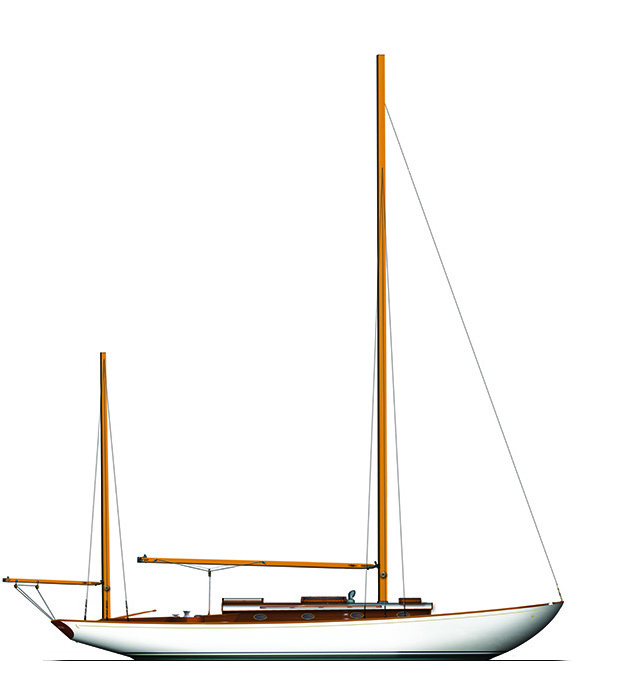
The Concordia’s appeal begins with her proportions. There is nothing exaggerated or trendy about her appearance. Her long sweeping sheer, moderate overhangs, low coachroof, and graceful yawl rig come together in perfect visual harmony. Every curve appears purposeful, every dimension carefully considered. Even those unfamiliar with sailing instinctively recognize the yacht’s elegance, while experienced yachtsmen appreciate the subtle balance that makes her one of the finest-looking sailing yachts ever created. Her signature cove stripe, traditionally adorned with a gold star near the bow and a crescent moon toward the stern, became an instantly recognizable hallmark that united the fleet while adding another touch of understated distinction. Step below deck and the same philosophy continues. Rather than relying on lavish appointments or unnecessary ornamentation, the Concordia embraces simplicity executed at the highest level. Warm mahogany joinery, carefully fitted cabinetry, practical sea berths, and thoughtfully arranged living spaces create an atmosphere that feels both refined and inviting. Every locker, shelf, and handhold serves a purpose, reflecting an era when yachts were expected to spend extended periods at sea rather than simply entertain at the dock. Owners often remark that a Concordia feels more like a traditional New England cottage than a boat, with an interior that encourages long cruises, quiet evenings at anchor, and the simple pleasure of life afloat.
Under sail, however, the Concordia truly distinguishes herself. C. Raymond Hunt’s design philosophy emphasized balance above all else, and nowhere is that more evident than in the yacht’s handling characteristics. The yawl rig provides remarkable versatility, allowing skippers to adjust sail combinations easily as wind and sea conditions change throughout the day. In fresh breezes, the mizzen offers valuable balance, while lighter conditions reward careful trimming of the full sail plan. The hull’s moderate displacement produces a comfortable motion that inspires confidence offshore, particularly in the steep chop and unpredictable weather for which New England waters are well known. Rather than demanding constant attention from the helm, the Concordia rewards thoughtful sailing with an effortless rhythm that has endeared her to generations of owners.
Although never designed solely as a racing yacht, the Concordia has demonstrated impressive competitive ability throughout her history. Numerous examples have successfully completed demanding offshore events, including the Newport Bermuda Race, where seaworthiness often proves more valuable than outright speed. At the same time, many Concordias have logged tens of thousands of cruising miles, carrying families safely along the Eastern Seaboard, through the Caribbean, across the Atlantic, and well beyond. This versatility reflects the brilliance of the original concept: a yacht capable of performing admirably under almost any circumstance without sacrificing comfort, elegance, or reliability.
Exceptional design alone, however, cannot explain the Concordia’s enduring legacy. Equally important is the extraordinary dedication of the owners who have preserved these wooden yachts over the decades. Maintaining a classic wooden vessel requires commitment, skill, and considerable investment, yet Concordia owners have consistently embraced the responsibility. Their efforts have ensured that the overwhelming majority of the fleet remains active today, an astonishing achievement considering the age of many of the boats. Annual rendezvous bring together owners who share not only a passion for fine yachts but also a deep appreciation for the history and traditions embodied by their vessels.
The Concordia yawl represents far more than a successful yacht design. She captures a unique period in American yachting when craftsmanship, thoughtful engineering, and timeless aesthetics came together in perfect harmony. Long before computer modeling and composite construction transformed yacht building, designers and craftsmen relied on experience, intuition, and meticulous attention to detail to create vessels that would endure for generations. The Concordia remains one of the finest expressions of that philosophy.
