

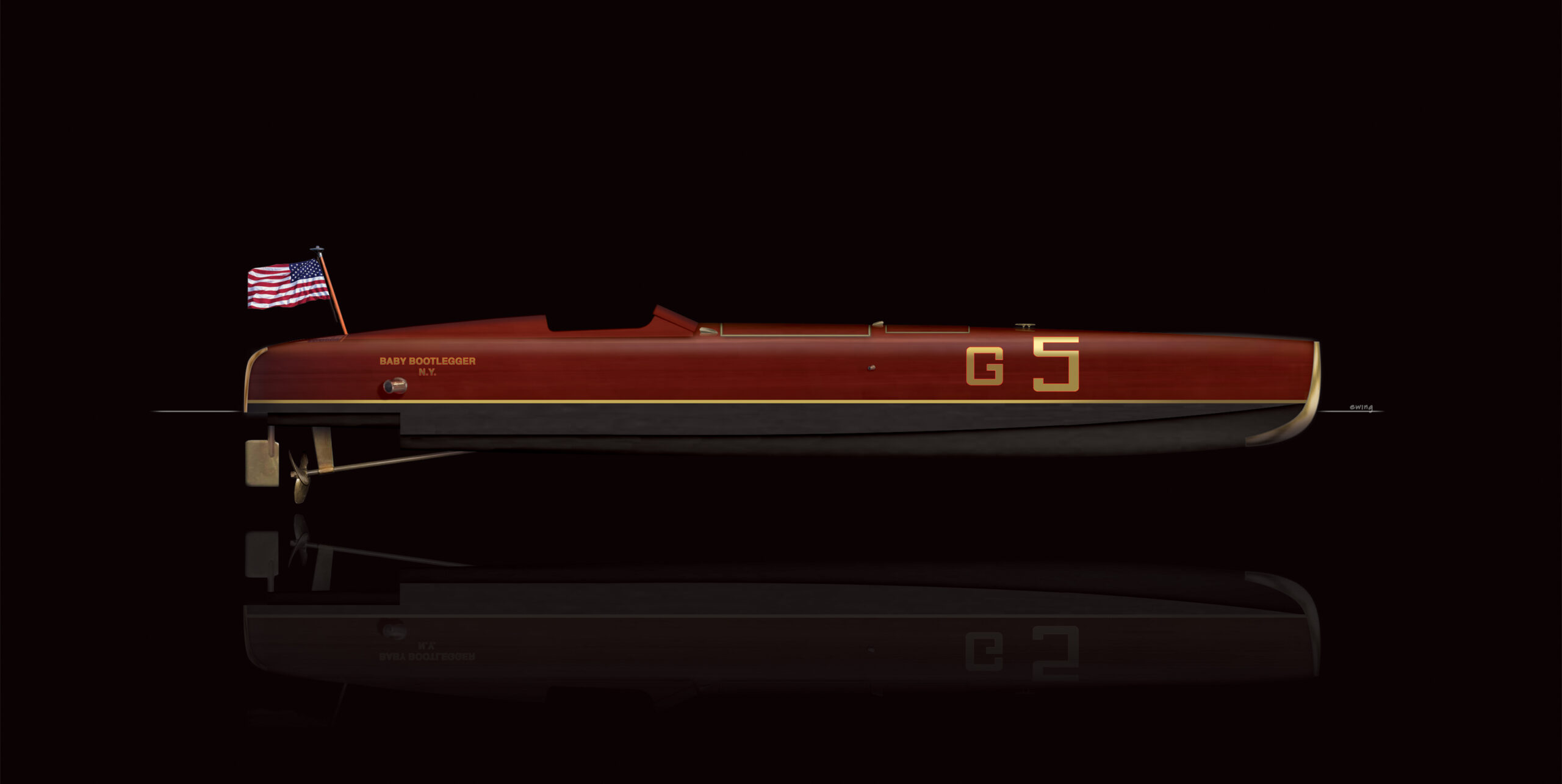
07 Jul Baby Bootlegger
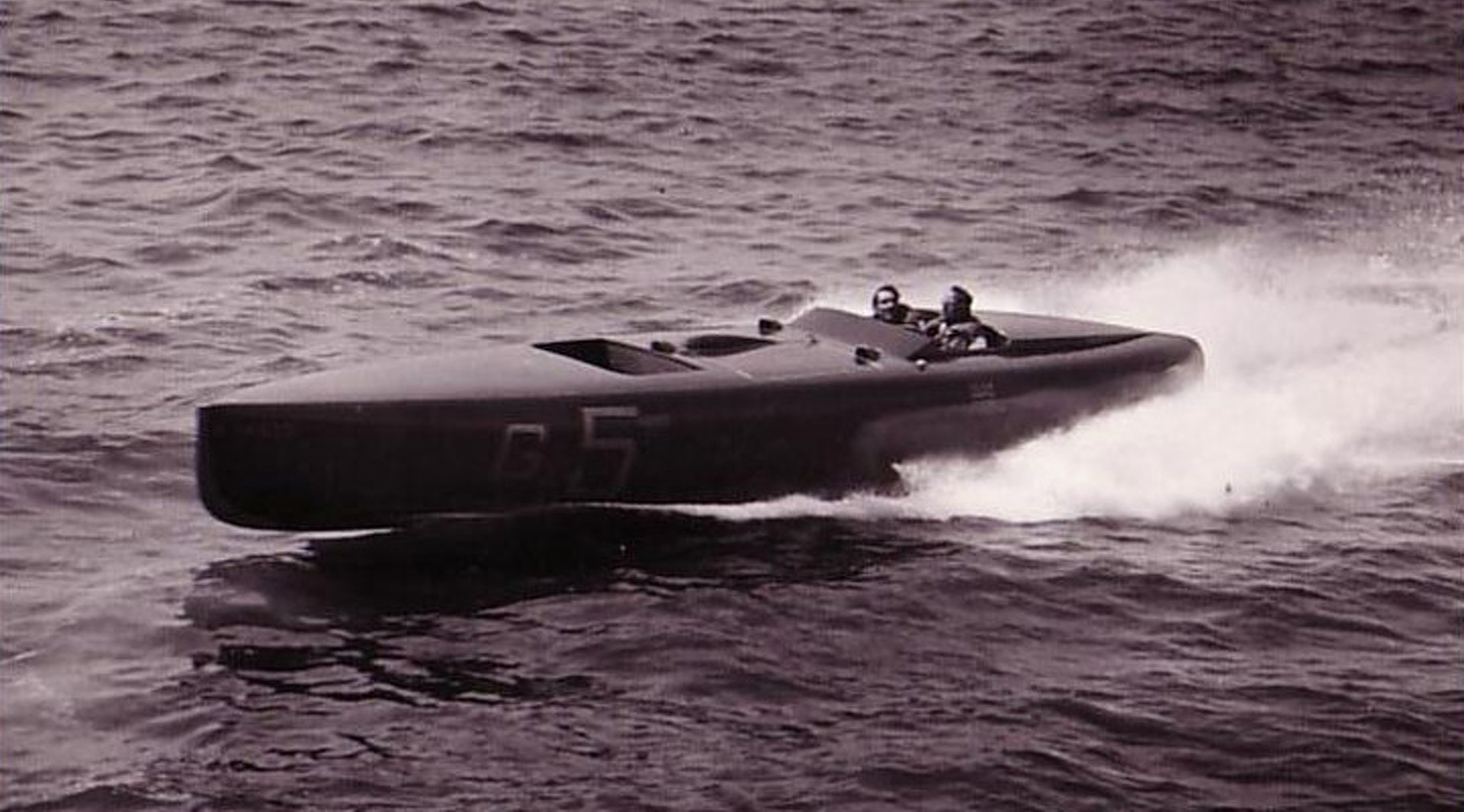 Built in 1924 and designed by the legendary naval architect George Crouch, Baby Bootlegger remains one of the most celebrated powerboats ever constructed. Nearly a century after her debut, she continues to represent the height of the Roaring Twenties’ fascination with speed, engineering innovation, and unmistakable style. More than a racing machine, she is a symbol of an era when wealthy industrialists, daring sportsmen, and gifted designers pushed the boundaries of what was possible on the water. With her sweeping mahogany hull, aircraft-inspired powerplant, and uncompromising pursuit of performance, Baby Bootlegger captured the imagination of a generation and established herself as one of the most significant boats in American racing history.
The story of Baby Bootlegger begins with her owner, Caleb Bragg, a remarkable figure whose interests extended far beyond boating. An industrialist, aviator, automobile racer, and accomplished sportsman, Bragg represented the adventurous spirit of the early twentieth century. He was fascinated by emerging technologies and sought out the ultimate expression of performance in both land and water vehicles. For his new racing boat, he turned to George Crouch, one of America’s most innovative naval architects, whose work had already earned international recognition for combining elegance with speed.
Crouch was a pioneer in high-performance hull design, and his approach to Baby Bootlegger reflected his understanding that success in racing required far more than simply adding horsepower. Her sleek, lightweight construction was carefully engineered to reduce resistance while maintaining the stability required for high-speed operation, with long, graceful lines, a narrow beam, and refined running surfaces that allowed her to harness extraordinary power while remaining remarkably efficient through the water. At the heart of this advanced design was a powerplant unlike anything previously seen in a racing boat—a modified Hispano-Suiza V-8 aircraft engine originally developed for First World War fighter aircraft. Delivering an exceptional power-to-weight ratio, the lightweight but immensely powerful engine gave the mahogany racer a significant advantage over conventional marine engines of the era and transformed Baby Bootlegger into a formidable competitor capable of astonishing speeds for the 1920s. Even her name reflected the spirit of the age. During Prohibition, “bootlegger” boats became associated with speed, daring, and rebellion, although Baby Bootlegger was built strictly for legitimate competition. The name perfectly captured the energy of the Roaring Twenties—a period defined by jazz, aviation, automobiles, and an obsession with machines that pushed the boundaries of performance. Her greatest achievements came during the fiercely competitive Gold Cup races of the mid-1920s, when powerboat racing had become a showcase of engineering innovation, driver skill, and courage. The prestigious event attracted the finest builders and competitors in America, with drivers pushing lightweight wooden racers to their limits while balancing immense horsepower against unpredictable water conditions and the inherent risks of extreme-speed competition.
Baby Bootlegger proved herself among the best. Her combination of advanced hull design and extraordinary power allowed her to compete at the highest level, demonstrating the effectiveness of Crouch’s theories and Bragg’s vision. Her success helped establish a new standard for performance boats and influenced generations of designers who followed. The lessons learned from racing craft like Baby Bootlegger contributed to the development of future high-speed boats, including the legendary runabouts and offshore racers that would define American performance boating throughout the twentieth century.
Despite her achievements, Baby Bootlegger, like many historic racing boats, faced an uncertain future after her competitive career ended. As technology advanced and public attention shifted toward newer designs, many early raceboats disappeared, their contributions to boating history gradually forgotten. Wooden performance boats were particularly vulnerable, requiring significant care and expertise to preserve. Without dedicated stewardship, one of America’s most important examples of early powerboat innovation could easily have been lost.
Fortunately, knowledgeable enthusiasts recognized the importance of preserving Baby Bootlegger and undertook the extensive work required to restore her. The restoration process demanded careful research, craftsmanship, and respect for the original design, ensuring that the boat’s character and engineering achievements were maintained. Today, she survives not simply as a static artifact of the past, but as a living representation of the creativity, ambition, and craftsmanship that defined the golden age of American powerboat racing.
